

Digital tools promise to save time, organize information and simplify tasks, but a strong demo does not always predict everyday performance.
The right decision is not about adding tools or features. It connects a real need with a journey that people can understand, operate and measure.
What to understand before making a decision
A useful analysis considers the expected outcome, the people involved, the required information and what happens before and after each action.
A digital solution creates value when it improves a real outcome and can be sustained in everyday work.
There is no universal formula. Context, risk and available capacity determine what should be prioritized.
Criteria that must work together
1. Need and usability
Define what a person must understand or complete without relying on assumptions.
2. Integration and continuity
Review how data, tools and owners connect throughout the journey.
3. Total cost and data control
Establish a measure that compares the previous situation with the outcome.
A simple test
Review one real case from beginning to end. Every step that relies on an informal explanation, manual copy or assumption reveals an unresolved decision.
Questions to review before moving forward
- What outcome matters? It should be described without naming a tool.
- Who owns it? Every stage needs a person or decision criterion.
- What can fail? Exceptions prevent designing only for the ideal case.
- How will it be verified? The test needs a measure and real observation.
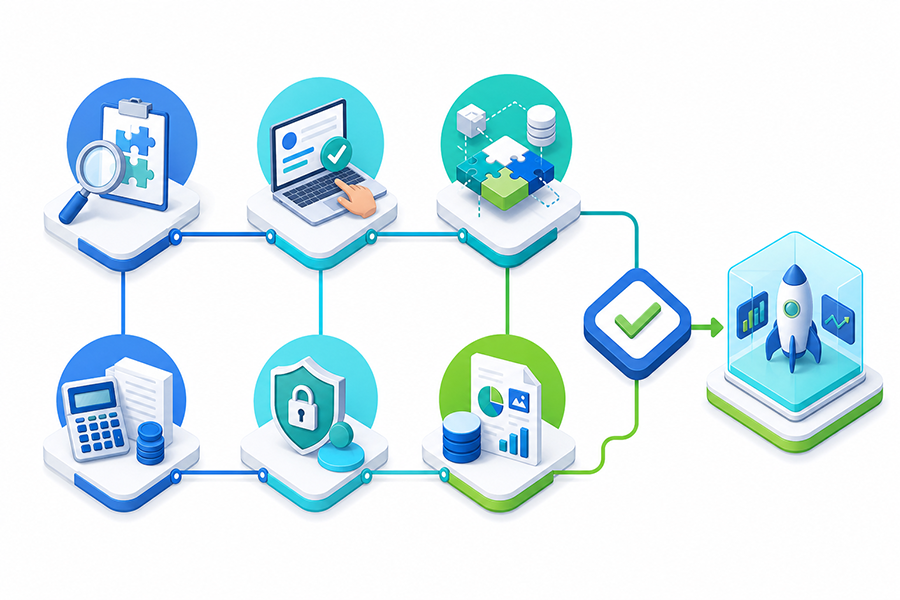
Need → Trial → Integration → Cost → Privacy → Decision
A useful measurement could be recorded as task_completed_without_help. Its name matters less than its connection to a verifiable outcome.
How to put it into practice
- Map the current situation. Record tasks, data, owners and friction.
- Define the expected improvement. Choose one primary outcome and realistic scope.
- Test the journey. Use a real case and document exceptions.
- Measure and adjust. Correct the foundation before adding complexity.
Begin with clear scope, defined ownership and a concrete measurement method before expanding the solution.
A reference for further reading
For a current practical reference, consult NIST Privacy Framework.
Conclusion
Technology should simplify a decision or process rather than add another layer of uncertainty.
Understand the problem first; then choose the solution that can solve it and create learning.