

When a business asks whether its website or system is secure, a blunt answer such as “yes, it is protected” is not enough to make a decision. Security depends on what is being protected, how it is managed, who has access, and what happens when something goes wrong. No short conversation can promise zero risk.
That does not mean a small business needs to begin with a complex program. On November 2, 2026, NIST published a cybersecurity guide for businesses with no employees other than the owner, and noted that it may also help small organizations with limited resources. Its approach is a useful reminder to start with the organization and its risks, then tailor measures to the context. At Ideasweb, we believe responsible digital conversations should be clear about scope and limits rather than rely on grand guarantees.
Start by defining what needs protection
“Protect the website” can mean different things: keeping an informational page available, preventing someone from taking over an administrative account, avoiding exposure of customer data, or reducing the chance that an online store is altered. Before discussing tools, note which assets matter and what the impact would be if they stopped working or were exposed.
An initial inventory might include:
- The domain, website, and administrative accounts used to change them.
- The email account used to recover other accounts or receive important alerts.
- Data collected through forms, orders, or inquiries.
- Connected services such as payments, analytics, email delivery, or customer management.
- The people and providers who can access each resource.
This list is not a universal standard or a substitute for a professional assessment. It is a simple way to keep a discussion from becoming “add more security” without identifying what that means.
Ask about specific controls, not labels
For web applications, risks also depend on design and configuration. The OWASP Top 10:2025 includes issues involving access control, configuration, authentication, and the software supply chain. OWASP presents it as risk-awareness material, not as a certification or proof that a system is secure.
In a project meeting, ask for plain-language answers to questions such as:
- Access: Who can administer the site, and how is access removed when someone leaves the project?
- Updates: Who reviews and applies software updates, and how are priorities set?
- Data: What information is collected, where is it stored, and who needs to see it?
- Recovery: What can be restored if the site or an account becomes unavailable?
- Incidents: Who is contacted first, who makes decisions, and which actions are within the agreed scope?
The answer may be “that is outside the contracted work.” That is not automatically a sign of poor practice if it is clearly explained. What matters is knowing who owns the task, what remains pending, and what decision the business needs to make.
Separate responsibilities and document them
Cybersecurity does not automatically belong to the person building a website, nor is it solved by installing a tool. A provider may have defined technical tasks; the business still makes decisions about users, data, devices, contracted services, and internal procedures. The division depends on the project and should be documented rather than assumed.
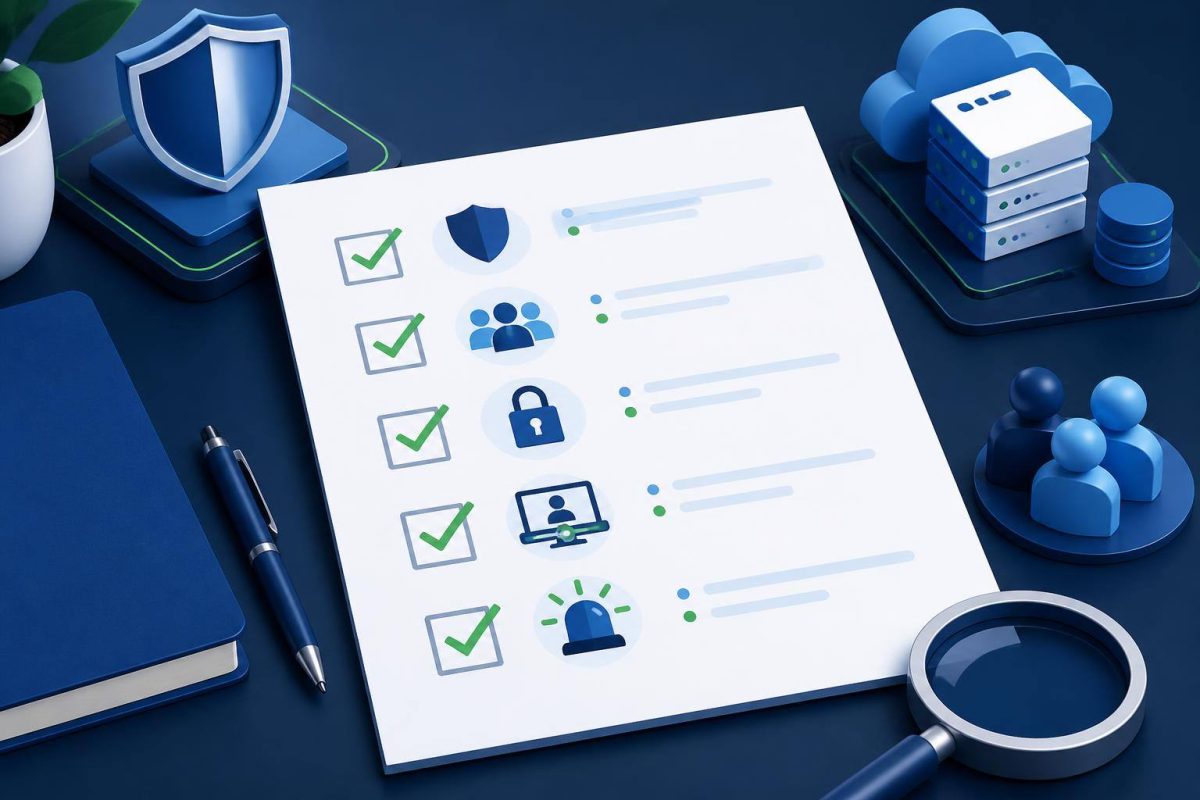
A brief record can use four columns: risk or task, owner, review date, and evidence. For example: “review who administers the domain; owner: business owner; date: project close; evidence: current list of people with access.” This is an editorial suggestion for tracking work, not an official NIST template.
A good security conversation does not promise that nothing will happen; it clarifies what is protected, who acts, and how decisions are reviewed.
How to begin without overstating the problem
- Choose a business priority. Start with what would cause the greatest disruption, information loss, or customer harm if it failed.
- Identify access and dependencies. Find out which accounts, people, and services are needed to operate or recover that resource.
- Ask for a verifiable measure. Find out what will be done, who will do it, and how completion can be checked.
- Agree on exceptions. If a task is excluded or cannot be done now, record who owns it and when it will be reviewed again.
- Revisit when the business changes. A new form, integration, user, or type of data may change priorities.
NIST’s guide for solo businesses also describes initial actions and ways to make progress as a business grows, while noting that it cannot address every organization’s needs. The practical takeaway is that preparation should evolve with the business rather than turn into a lasting promise that “everything is covered.”
Your next conversation
Before approving a project or considering a review complete, ask for three things in plain language: what will be protected, what is outside the scope, and who will respond to an incident. Then turn any open item into a task with an owner and a review date. This does not eliminate risk, but it makes decisions visible and actionable.