
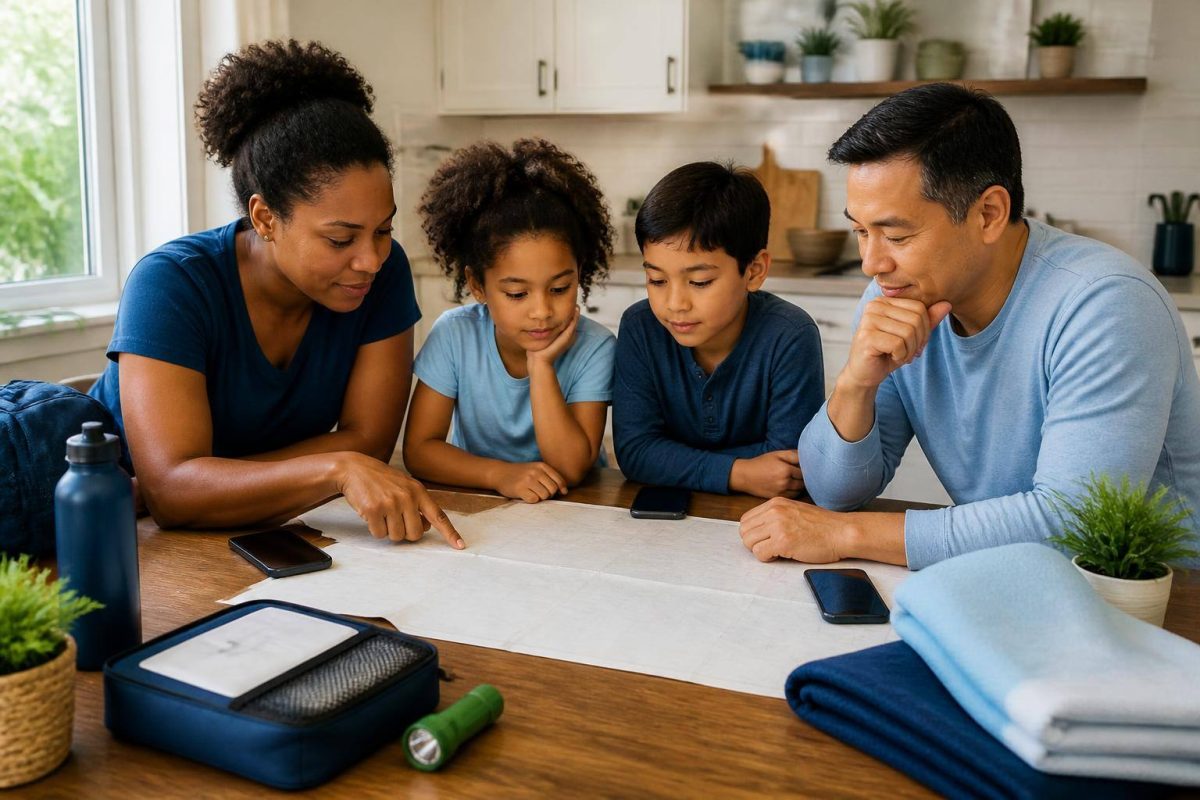
If an emergency happens while family members are apart, knowing whom to contact and where to meet can reduce confusion. You do not need to predict every scenario or create a complicated document. What matters is that everyone knows the basic agreements and can find them.
A family communication plan brings together contacts, meeting places, and ways to communicate. Ready.gov, FEMA’s official preparedness website, offers a worksheet for contact details, meeting places, and important numbers. Use it as a reference and adapt it to your household’s needs.
What the plan should answer
Before writing down numbers, talk through the decisions you might need to make if you cannot get home right away, are in different places, or have trouble communicating. The plan should answer these questions in plain language:
- Whom do we contact? Choose a trusted person, possibly someone outside your immediate area, and decide who will notify the rest of the household.
- Where do we meet? Agree on possible locations: one near home and another outside the neighborhood, depending on the situation.
- What if the first communication method fails? Choose alternatives, such as sending a written message or contacting the agreed person.
- What needs should we consider? Account for children, older adults, people with disabilities, essential medication, and pets where relevant.
A plan does not replace instructions from authorities or local guidance. Its purpose is to help household members coordinate and share essential information.
Build the plan step by step
1. Choose contacts and confirm they agree
Write down each household member’s name and phone number, along with a trusted contact who may not live nearby. Ask before adding that person, and make sure they have current household numbers. Agree on a short message they should pass along if someone cannot reach the others.
Do not rely on everyone remembering every number. Save the information on phones and keep a copy available another way. If children or people who do not use a mobile phone are involved, consider how they could access the information or ask for help.
2. Choose meeting places
Select options that make sense for your household and describe them clearly: the place’s name, address, or directions that are easy to recognize. One location may work if the problem is inside the home; another may be useful if the nearby area is inaccessible. Make sure everyone understands when to use each option.
Do not assume everyone can travel in the same way. Consider transportation, accessibility, caregiving responsibilities, and pets. If your household routine changes, check whether the locations and agreements are still realistic.
3. Agree on how to communicate
Decide what the first contact attempt will be and what to try if there is no response. A short message can say who is safe and where they are, if it is safe to share that information. Avoid putting unnecessary private details in messages or public posts.
Ready.gov’s family communication planning guide recommends sharing the plan and practicing how to use the contacts and methods you have chosen. Adapt the guidance to the situation and always follow official instructions.
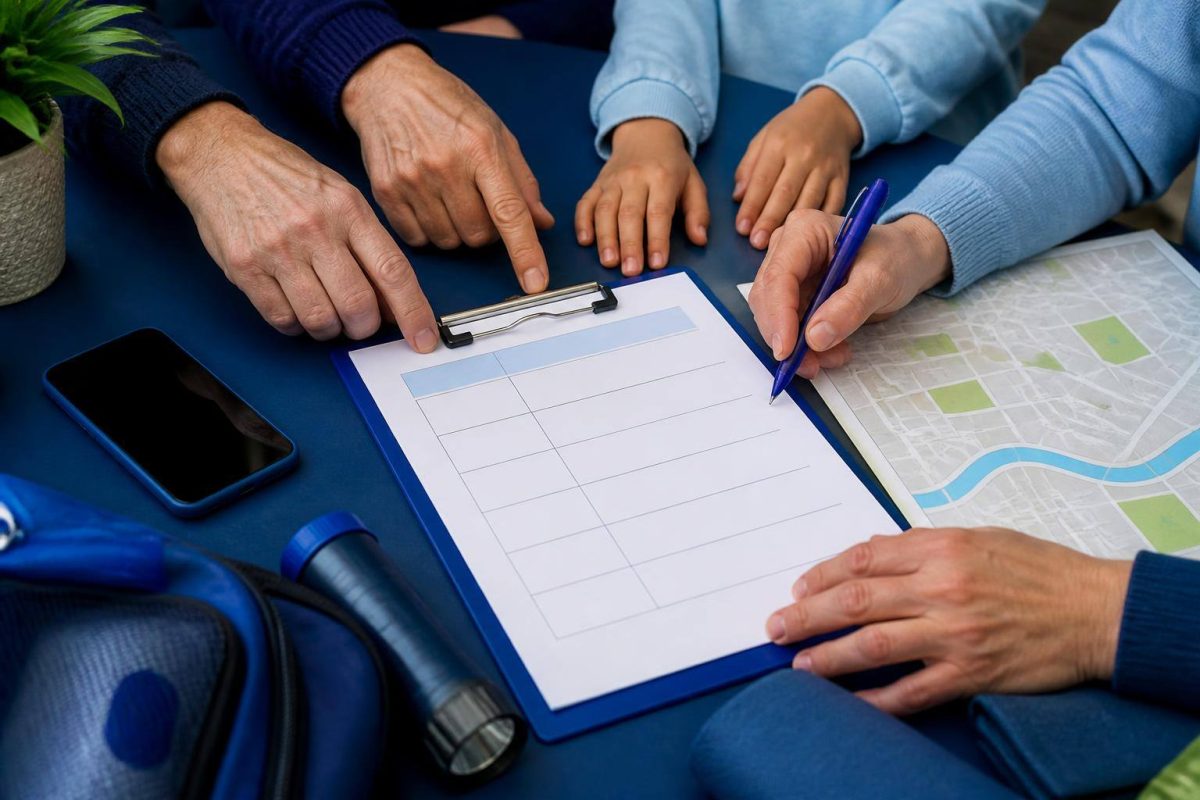
Keep copies and protect the information
A plan saved only on one phone may be hard to access if the device runs out of battery, is lost, or is unavailable. Save a version on the phones of those who need it and keep a paper copy in a known place. Consider carrying a small copy in a wallet, backpack, or bag, especially if a household member spends time away from home.
Include only the information needed to coordinate. Medical and contact details can be sensitive: share them with people who genuinely need to know, and keep copies in a reasonably protected place. Check that phone numbers and addresses are still current.
Practice and keep it current
A plan that no one has reviewed may fail because a number is outdated, a meeting place is unfamiliar, or routines have changed. Do a short practice: each person explains whom they would contact, what backup they would use, and where they would find the plan. There is no need to stage a real emergency; just check that everyone understands the agreements.
- Review contacts and details when a phone number, address, school, or workplace changes.
- Confirm that the people listed agree to their role and know how to reach your household.
- Check that each person can find the plan, even without their usual phone.
- Review changing needs related to mobility, caregiving, medication, and pets.
A plan’s value is not in predicting everything; it is in helping each person quickly find the next agreed step.
One simple way to start
Set aside a few minutes to write down a trusted contact, two possible meeting places, and one backup communication method. Share this first version with your household, clarify anything confusing, and practice once. Then keep the plan somewhere everyone knows and review it when daily life changes. That first draft turns a vague intention into concrete agreements people can refer to.