

A campaign can generate plenty of form submissions and still produce few business opportunities. A form shows that someone shared their details; it does not prove that the person fits your offer, spoke with your team, or purchased. If you measure only form submissions, advertising may look successful while sales receives contacts that go nowhere.
The answer is not to change every campaign at once. First define what progress means for your business, record those changes consistently, and check whether the data can be connected to its source. Then, if your setup and privacy requirements allow it, consider importing later outcomes into advertising platforms.
Distinguish a contact from an opportunity
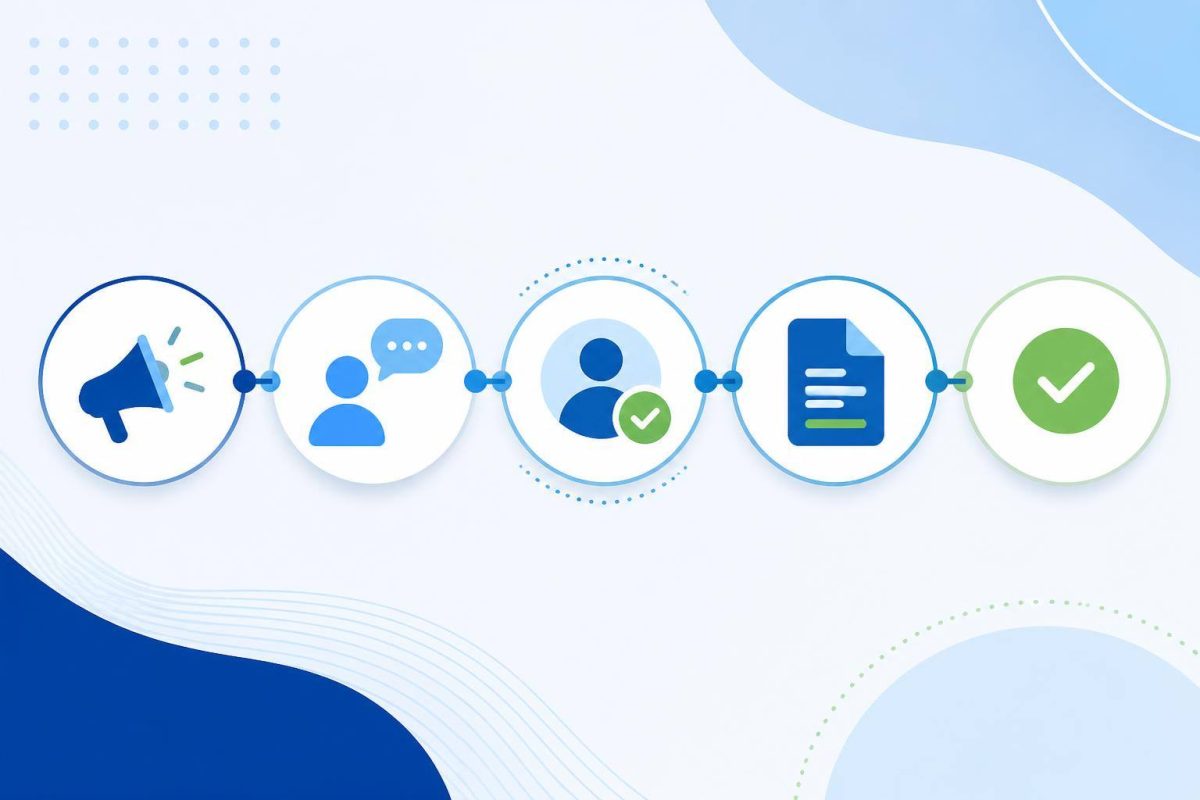
Choose stages that describe observable events, rather than vague impressions. An initial funnel might include:
- Inquiry received: a form, call, or message arrived and may be linked to a campaign.
- Contacted: the team attempted to reach the person or had a conversation, according to your chosen rule.
- Qualified: the contact meets relevant conditions for the product or service.
- Proposal sent: a specific commercial proposal was presented.
- Sale closed: the event your business defines as a sale has occurred.
- Disqualified or lost: a practical reason was recorded, rather than leaving opportunities open indefinitely.
You do not need to use this list word for word. A business that sells in one call may need fewer stages; a consultative process may need to distinguish meetings, proposals, and approvals. Keep only stages your team can update and that help inform decisions.
Set rules before counting outcomes
“Qualified lead” is useful only when the team applies it consistently. Write down concrete criteria: service area, type of need, an indicative budget if appropriate, timeline, or customer profile. Avoid turning a subjective preference into a rule that screens out good prospects.
Also decide who updates each stage, when they do it, and what minimum information they record. If an inquiry arrives by phone, for instance, the procedure should say how to create a record and note its source when known. If loss reasons matter, offer understandable options and allow a short note for unusual cases.
Editorial recommendation: a simple definition applied consistently is usually more useful than a detailed funnel nobody maintains.
Before using the data to assess advertising, review a sample of records with the sales team. Look for duplicates, missing fields, inconsistent stages, and contacts whose status was never updated. A precise report cannot fix unclear classification; it only presents it with greater confidence.
Connect outcomes to campaigns carefully
Attributing an opportunity to an advertising interaction requires keeping source data or identifiers in an orderly way. Your setup might involve website tags, campaign parameters, click identifiers, or an integration with the system where leads are managed. The right option depends on your tools, customer journey, and technical capacity.
Google describes enhanced conversions for leads as a way to supplement the measurement of later conversions with user-provided first-party data. It also recommends checking tagging, imports, and diagnostics before treating an implementation as correct. This feature does not guarantee complete attribution or increased sales by itself; results depend on consistent records and whether systems can match them correctly. See the official Google Ads guide to enhanced conversions for leads.
Google Ads distinguishes qualified-lead and converted-lead goals. In practical terms, one represents an opportunity that passed a later assessment, while the other represents a conversion stage defined by the business, such as a closed sale. Check the platform’s definitions against your actual process in its official documentation on qualified and converted leads.
Implement in stages and validate the data
- Map the current journey. Record what happens from inquiry to close and which tools are involved.
- Choose a few useful stages. Define criteria, owners, and when each status is updated.
- Check source capture. Verify forms, campaign parameters, available identifiers, and how they are saved in sales records.
- Test real cases. Follow several inquiries from start to finish and confirm that each change is recorded without duplication.
- Assess importing outcomes. Once the process is reliable, review the platform’s current documentation and requirements, including data handling and any applicable consent.
- Compare stages, not just volume. See how many inquiries progress and where they stall. Treat differences as signals to investigate, not automatic proof of causation.
Protect data and avoid rushed conclusions
Contact details are personal information. Limit access to people who need it, share only what is necessary, document the purpose, and seek appropriate guidance on obligations that apply to your business and location. Hashing a data point for an integration does not automatically make every use appropriate or replace a privacy review.
Also separate measurement from budget decisions. A campaign with fewer leads may produce more opportunities; one with more closed deals may have a longer sales cycle or incomplete records. Check the time period, volume, data quality, and process changes before reallocating spend.
Conclusion: start with follow-up you can sustain
Agree on a shared definition of a qualified lead, assign someone to update its status, and test the journey with a small group of inquiries. Once those stages are trustworthy, assess how to connect outcomes with your ad platform. If you need to align strategy, campaigns, and measurement as one process, explore Ideasweb’s digital marketing service. A useful next step is to review five recent leads and record the stage each one has actually reached.